
DIY Workshop M&E
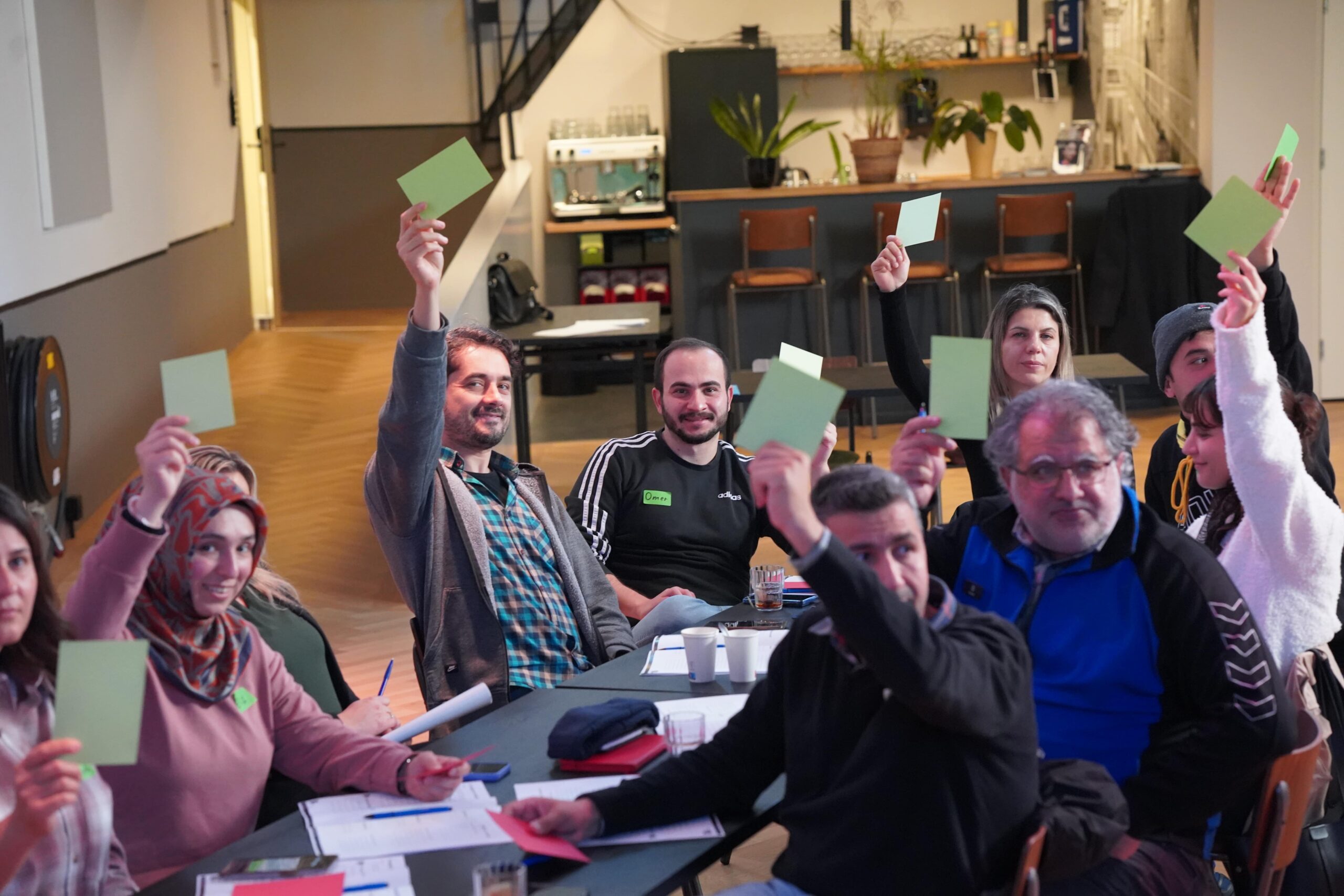
Discover your Blind Spots in Integration Policy
This working method helps you and your team to identify where you do and do not have knowledge about the experiences of newcomers in the Netherlands, using the integration circle. By doing this together, you gain immediate insight into where your knowledge is lacking and where you need the experiences of newcomers themselves in order to take the first step towards more targeted improvement.
This working method is based on a workshop that we previously gave live to professionals, policymakers, and social organizations.
What are you going to do?
In 5 steps, you can map out:
- Which indicators you are familiar with
- Where knowledge or data is still lacking
- What you already know from lived experience, monitoring, or case studies
- What you can do next to reduce blind spots
Time investment: 30–60 minutes (with team) or approx. 20 minutes (individually).
Do the exercise together with your team. That gives the best results!
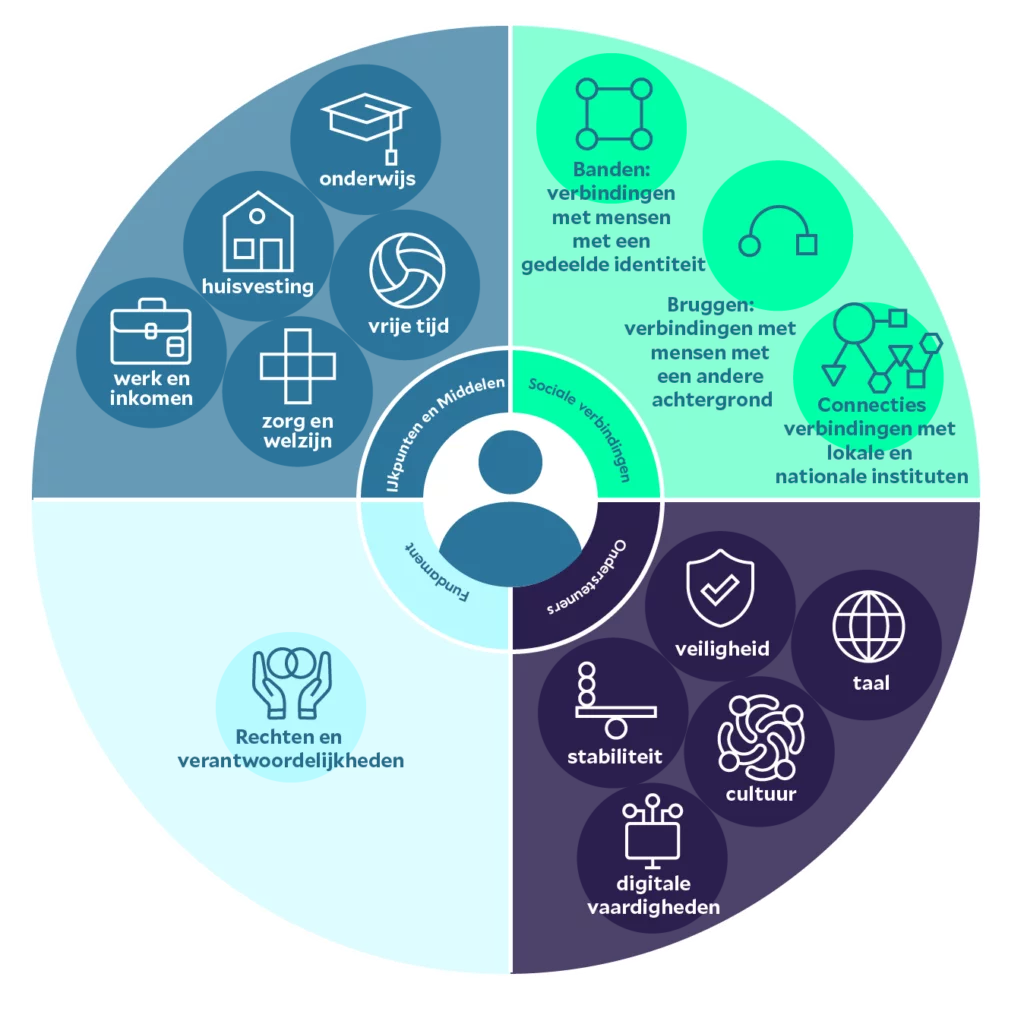
Integration Circle
Step 1: Get to know the model
Watch the short video explanation (2-3 minutes) in which we discuss:
- The integration circle with 14 indicators
- How to measure, learn, and improve in every domain
- Why understanding what you don't know is crucial for effective monitoring
If necessary, please also refer to the further explanation about the Indicators of Integration.
Tip: allow participants to explore the icons freely before you begin the reflection session.
What do you need? (downloads)
- Reflection cards (worksheet – PDF)
- Indicator icons (PNG)
- DIY workshop manual (PDF)
You can find this at the bottom of the page.
Optional:
- Printer for physically using cards or icons
- Post-it notes or stickers for making additional notes
Watch the Video
Preparation
Use the icon download to view them and print them out.
Lay out all the icons for the session on a large table.
Step 2: Select an indicator
Take a look at the printed icons with the team. Before you continue, you can decide whether you want to cover all indicators or just a few:
By choosing all indicators, you will be looking at the issue holistically.
At OpenEmbassy , we often OpenEmbassy with all indicators, because building a new life in the Netherlands covers many areas of life.
How to choose indicators
You can choose a number of indicators based on:
- The themes that are closely related to your work and the work of your team.
- The 3 or more indicators that you consider most important
- The indicators that you think are important for newcomers. Based on our research, we recommend that you choose Work and Income, Care and Welfare, Housing, Bridges, Connections, Language, Safety, and Stability, among others .
Asking questions about the chosen indicators
For each (selected) indicator, ask yourself the following questions:
Do you know what the experiences of newcomers themselves are in this area of life?
Use a scale of 1–5 or colored stickers to visualize this, for example:
Red = we know little to nothing about this
Orange = we know something about this, but not very much
Green = we know a lot about this
Optional: Use Post-it notes to explain why you don't know much about this indicator yet.
Step 3: Fill in reflection cards
Use the worksheet (digital or printed). For each red/orange indicator, choose one card and answer:
"What do I already know and what don't I yet know about how newcomers experience this living environment?"
Elaboration: what do I already know?
For example: language indicator: most people want to start learning the language quickly once they move to the municipality.
Tip: ask each other questions when writing down what you already know: is this an assumption? Where do we get this knowledge and insight from? What else might this mean?
For example: if people want to start learning the language quickly, can't they start before they move to the municipality?
Elaboration: what don't I know?
For example, the language indicator: do newcomers in our municipality/organization have sufficient contacts with whom they can practice the language?
(NB for red/orange, OE could create an expert pool > preparation survey/expert pool)
Discuss further the things you don't know:
- Is it important to retrieve this information?
- How could we retrieve this information?
Step 4: Discuss with each other
Look at the big picture together (or alone): which topics have the most blind spots? What do you already know a lot about?
What data and knowledge do you really need to make better decisions?
Step 5: Take the first step toward greater insight
Use the following questions as a conclusion:
- Where would we like to install the first floor?
- How can we retrieve this data?
- What would be a good first step?
Tip: make an overview (photo/scan) of the completed cards and stick it in a visible place or in your team document.