
It is essential that the experiences of newcomers guide the policies we develop. That is why the perspective of newcomers is central to the large-scale study of the Integration Act. We are conducting this study in collaboration with Regioplan and BMC on behalf of the Ministry of Social Affairs and Employment.
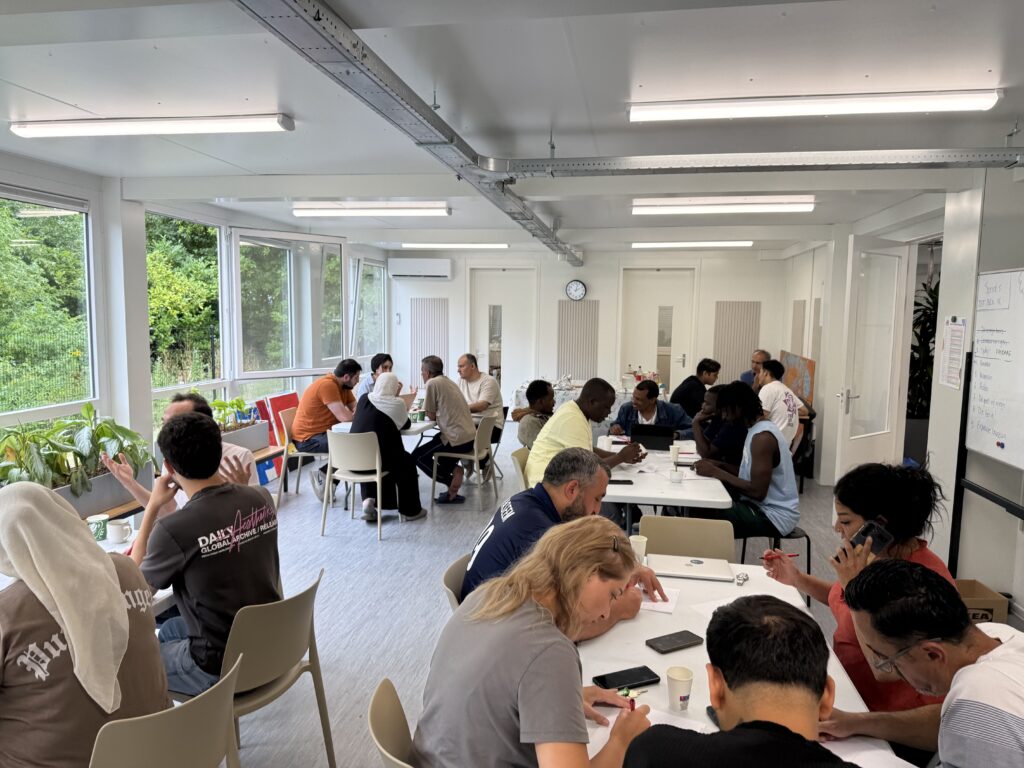
For four years, we have been accompanying people who are integrating into society, under the old or new Integration Act. We talk to them about their experiences, ideas, and questions. To this end, we use various qualitative research methods: expert pools, action research, interviews, and design probes.
This is the first time that such a large-scale study has been conducted into newcomers' perspectives on integration.
How do newcomers view the Integration Act?
How do we know that policies developed on the drawing board actually match people's lives, expectations, and plans? On behalf of the Ministry of Social Affairs and Employment, OpenEmbassy, Regioplan, and BMC are conducting research into newcomers' perspectives on integration in the Netherlands. The research will continue until the legislative evaluation in 2027. We are very proud to be conducting this research. This is the first time that such a large-scale study has been conducted into newcomers' perspectives on integration!
Research methods
OpenEmbassy conduct the qualitative part of the research. For four years, we will follow people who are integrating into society and talk to them about their experiences, ideas, and questions. We will do this using our expert pool methodology, action research, interviews, and design probes. This allows us to do justice to the diversity of the group of people who are integrating into society and to take into account the different ways in which experiences and stories are shared. We will follow people who are integrating under both the old and new Integration Acts.
Regioplan is responsible for the quantitative part, an annual survey among people who are integrating into society. The results of the survey feed into the approach for the qualitative research and vice versa. In addition, a panel of people who are integrating into society, or have already integrated, monitors the research method and the interpretation of the results. BMC involves various Dutch municipalities in the research.
"It is essential that the experiences of newcomers themselves guide the policies we develop. We are therefore extremely proud to be conducting this research. The research will provide important insights that we cannot ignore: after all, we are gathering the voices of citizens themselves. We hope that this will set a new standard,"saysRenée Frissen, founder of OpenEmbassy.
Author —Pepijn Tielens, Advisor/researcher at OpenEmbassy
Photo byAlexas_FotosonUnsplash
Download report
Would you like to know more about this research?