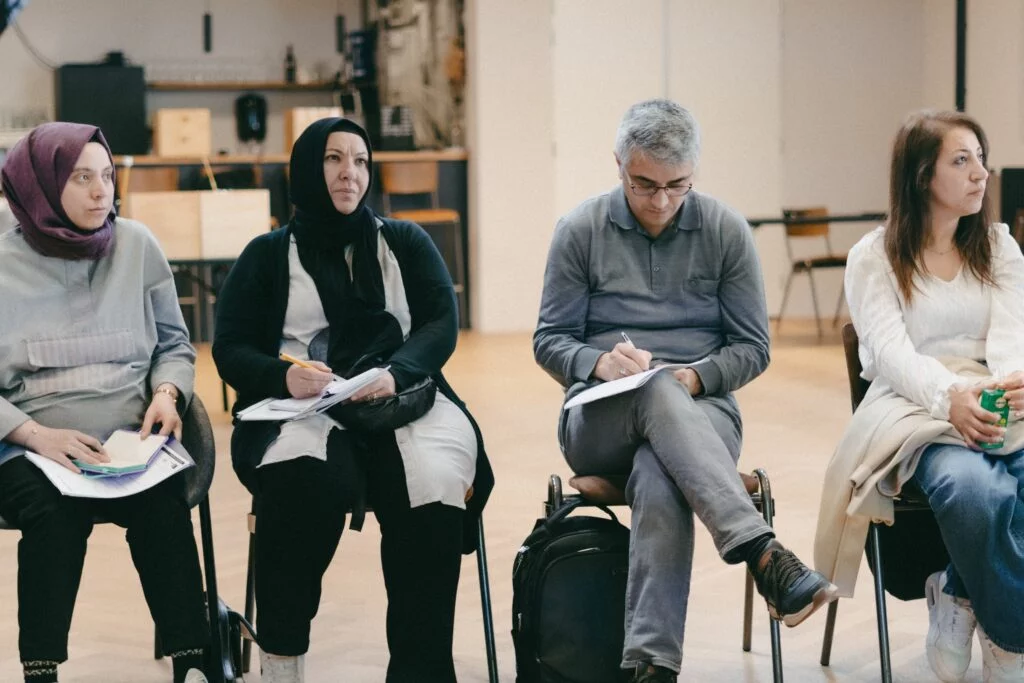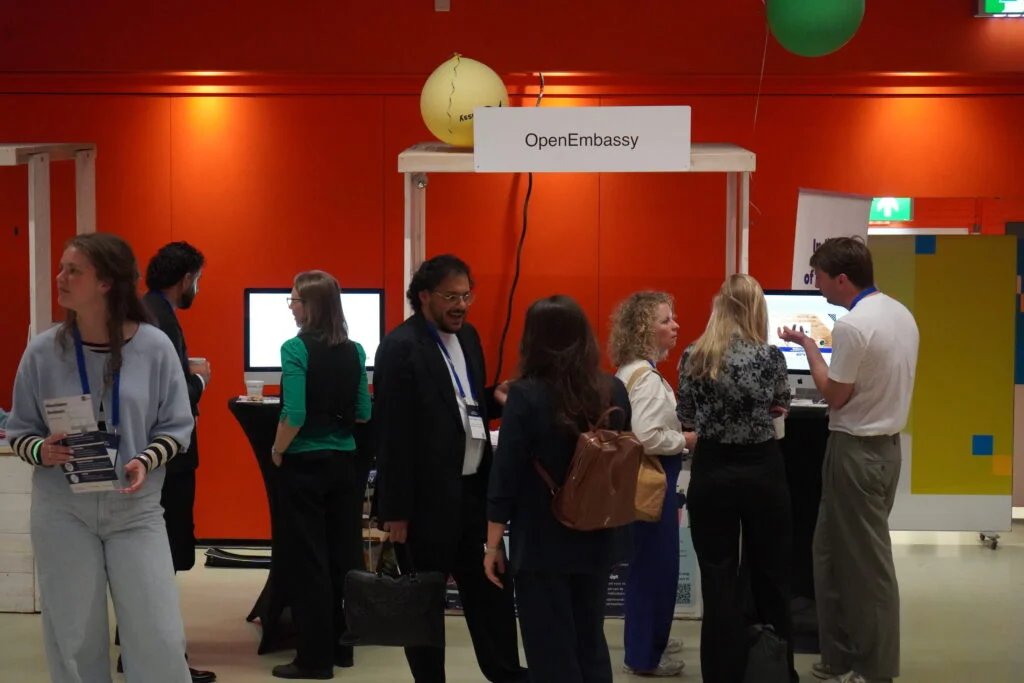
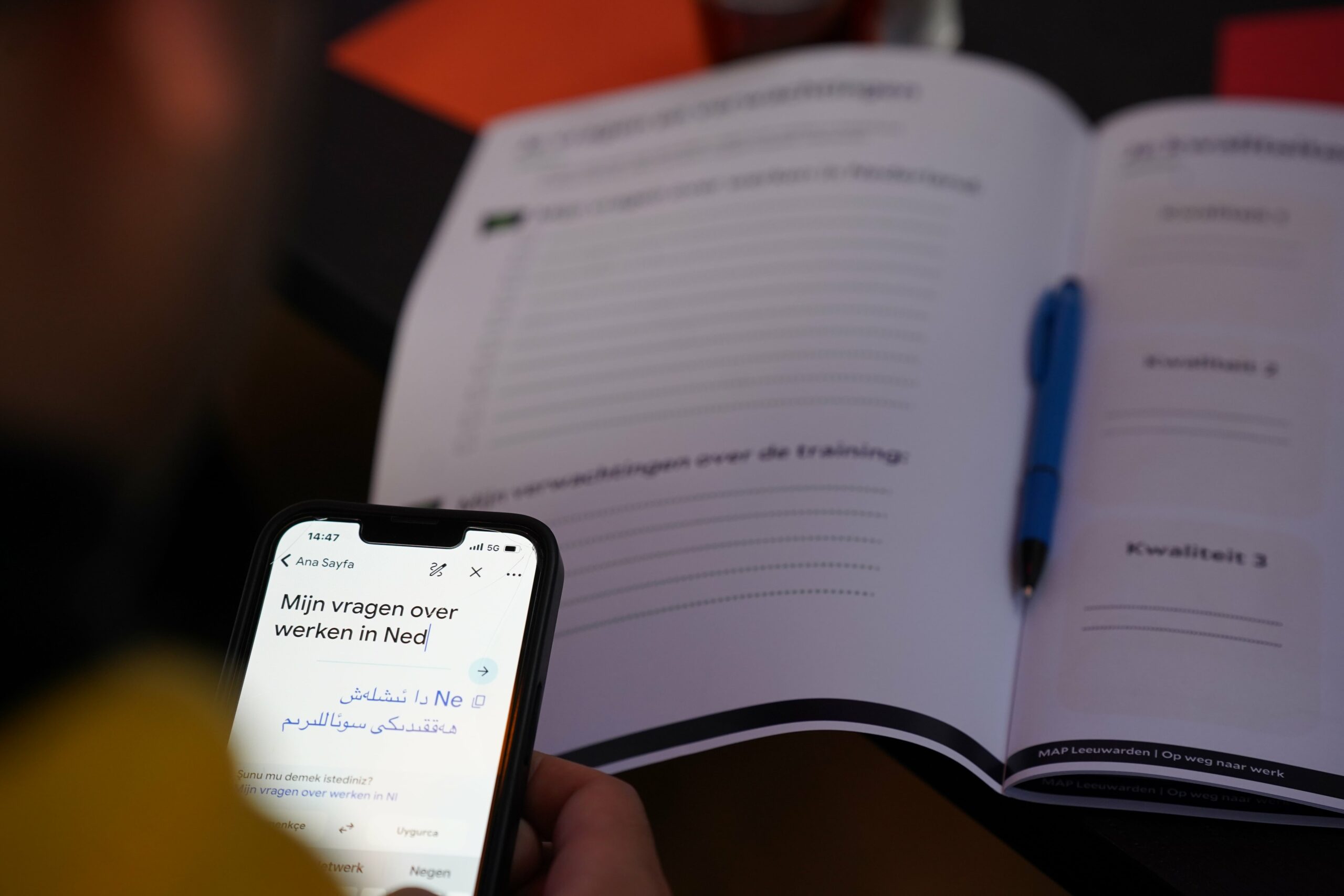
In the focus group "Getting a grip on your career,"we gatheredexperiences from people who fall under the regular asylum and integration policy.The workshop had two goals: to create a personal plan for work and to learn together about what works and what doesn't when you want to work as a newcomer in the Netherlands.
The focus group identified four key themes for newcomers to the labor market: information provision, development opportunities, informal networks, and prospects. In our first article, we focused on the first three themes. In this article, we will focus on the last theme: prospects.
By: Jolien de Vries
Work prospects and influencing factors
The focus group was part of ouraction research among Ukrainian newcomers, with a focus on work. In this research, we investigated how the policy for people from Ukraine—which differs from that for people in the regular asylum procedure—works in practice and how it is experienced.
The theme of 'perspective' was discussed in various ways within the focus group. Perspective here refers to a dream or idea for the future. It is a dot on the horizon that guides the steps people want to take to achieve their goal.
The focus group specifically addressed career prospects: what are people's dreams and goals in terms of work? These goals and dreams change over time and are influenced by factors such as information about what is possible in the Dutch labor market. The more information someone has, the better they can set realistic goals and map out the steps to achieve them. The kind of work future that newcomers to the Netherlands pursue depends on various factors. In the focus group, we heard about different work prospects and gained insight into the factors that influence these prospects.
Real access to job opportunities
Real access to development or work opportunities has a strong influence on a person's perspective and the steps they take. Finding a job is a realistic option for people from Ukraine who fall under the Temporary Protection Directive (TPD) (see Article 3 Success factors for newcomers to the labor market). This fact seems to be an additional motivator to take steps towards finding work and to continue to actively develop.
For people who are in the asylum process, having to find work before they can obtain a social security number and actually start working is a real obstacle. At the beginning of the workshop, most of the people in the asylum process were strongly focused on this obstacle. As a result, there was little room to think about the (limited) steps they could already take.
Policy factor: residence permit
As mentioned, participants who are in the asylum procedure are strongly focused on obtaining a BSN. Without a BSN, there is no access to the labor market. As a result, they were less explicit in highlighting other policy factors that influence the employment prospects of newcomers.
Ukrainian newcomers have direct access to the labor market. Here we see that the duration of the residence permit is a policy factor that has a strong influence on job prospects. Participants from Ukraine indicated that at the beginning of their stay, they were mainly focused on learning the English language. Because if you speak English, you have more choice in job opportunities. At the same time, English is also useful outside the Netherlands. The former high demand for English lessons fits in well with the prospects offered: immediate access to the labor market, but without the prospect of long-term residence in the Netherlands.
Contextual factor: situation in country of origin
In the focus group, the duration of the residence permit for people from Ukraine was still unclear. Nevertheless, we saw that the employment prospects for many people are changing, or are in the process of changing. The participants in the focus group described how their outlook changed when they realized that the war in Ukraine was unlikely to end any time soon. Instead of focusing on finding a job quickly, people began to ask themselves, "What do I need to be able to stay in the Netherlands for longer?"
This path looks different for everyone. While some focus on learning the Dutch language, others look for better (often English-speaking) work, and still others first need a period of reflection, rest, and processing. Of course, the situation in the country of origin also influences people who are in the asylum procedure. However, because the participants in the asylum procedure were very focused on obtaining a BSN, the situation in the country of origin was not explicitly linked to the goals for work in the Netherlands in the focus group.
Expansion of imagination
One of the assignments in the workshop was an imagination exercise in which you imagine that nothing stands in the way of achieving your ultimate work situation. One participant who is covered by asylum policy said that this helped him to focus more on the steps toward this dream for the future, even though the BSN issue remains a real obstacle.
The presence of someone who, despite all obstacles, had been granted a social security number during the asylum procedure also broadened the perspective of other participants. These concrete examples from the workshop emphasize the importance of focusing on perspective development and offering opportunities for this, even within limited legislation and regulations.

'I wanted and could work, but couldn't do so without a BSN. According to the rules, I would have to wait a few more months. I then compiled a list of employers who offered me work and submitted it to COA. With this proof, I received a BSN earlier than usual'.
Work prospects affect access to the labor market
Focusing on employment prospects affects many aspects of how newcomers access the labor market in the Netherlands. It is about what prospects you offer people: what is possible within the current policy frameworks? This applies to both realistic development and employment opportunities and the duration of a person's residence permit.
In addition, employment prospects are also about the personal process. The process in which newcomers explore employment opportunities, shape their own dreams for the future, and chart a path toward these visions of the future. Informal contacts, support, and good information provision can be helpful in this process.
Policy opportunities
These insights offer concrete opportunities for further action. Focusing on opportunities and support in personal perspective development is the low-hanging fruit here. But in addition, it remains very important to work on expanding the concrete opportunities for all newcomers. Such as the legal prospect of residence and realistic work and development opportunities.
One factor that is clearly less easy to change is the situation in the country of origin. Nevertheless, it is important to take into account when formulating and implementing policy that this factor does indeed influence the (employment) prospects of newcomers to the Netherlands.