What is an Expert Pool – and why it is not a focus group
Avoid costly misunderstandings: why traditional focus groups fall short with vulnerable target groups.
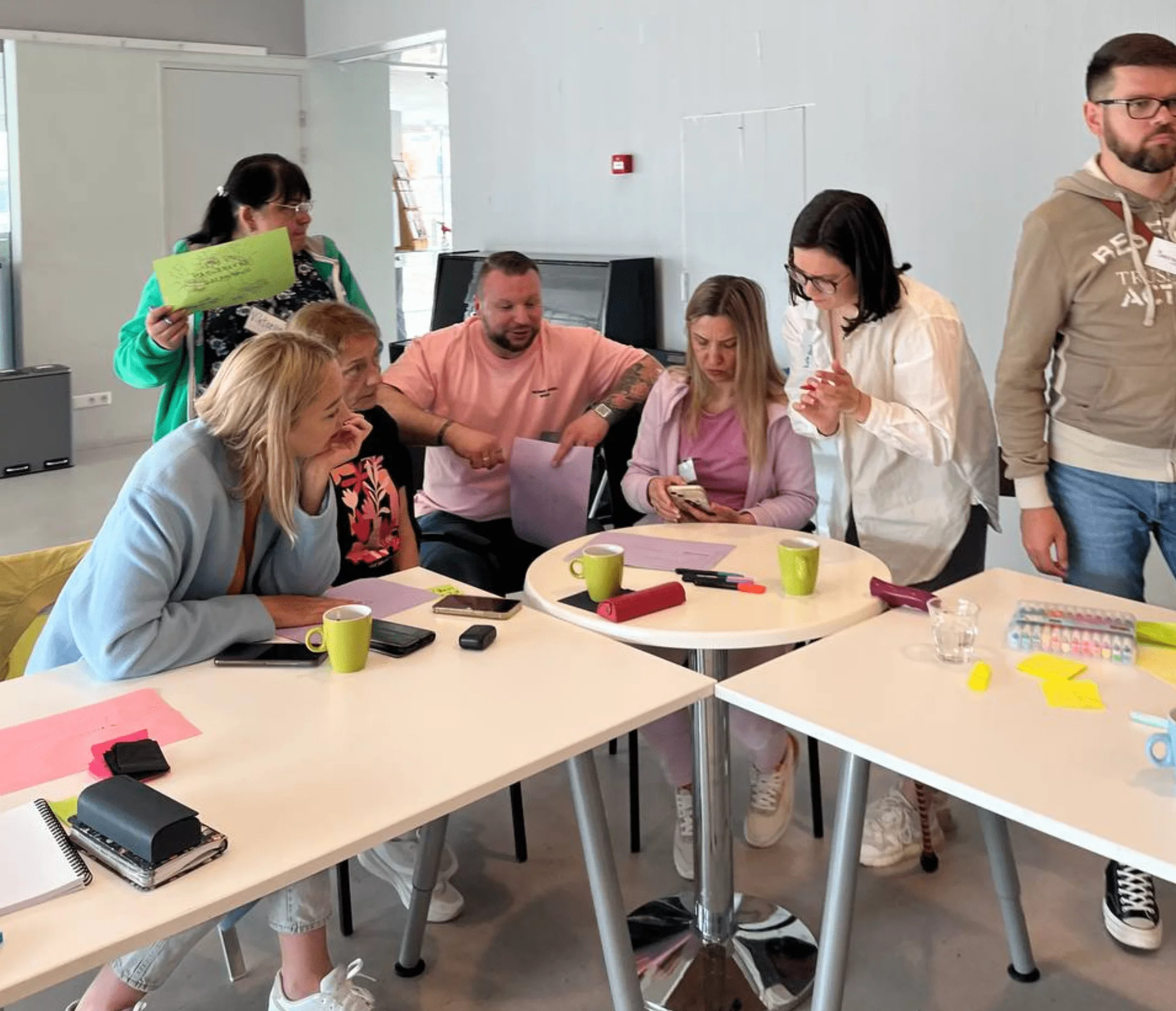
One of OpenEmbassy most requested services OpenEmbassy organizing expert pools. Researchers, policymakers, and employers often ask us the same question: how does this differ from a focus group? That is why we are explaining our expert pool methodology here.
In short, an expert pool is a meeting with 15–20 participants who share their experiential knowledge on a specific topic. But it starts much earlier than the session itself—with recruitment. And that is precisely where there is an important difference with the traditional focus group.
By: Anna Bilenka
Experiential knowledge first
Don't design for people without involving them: this way, you get the right voices at the table from the start.
A core principle at OpenEmbassy redefining what ‘expertise’ means. We recognize that people are the experts of their own lives. No academic or professional knowledge can match what someone experiences themselves.
That is why we focus on experiential knowledge in every study or policy process. Especially when it concerns people who are affected by the policy. They not only provide insight, but also motivation and legitimacy to actively contribute ideas.
Many participants in our expert pools are also actively involved in their communities. This allows us to quickly scale up through them when broader research is needed.
Trust begins before the first word
Don't walk into a cold room: how community building beforehand makes all the difference.
We invest heavily in recruitment: not only to assemble a diverse group, but also to build trust from the outset. We communicate in everyone's native language, take culture, potential sensitivities, and triggers into account, and make it clear right away: you are the most important person in this session.
The result? An open, trusting, and engaged atmosphere during the meeting.
Privacy is non-negotiable
Fear of sharing your story is understandable: this is how we ensure safety and trust.
"I don't dare come, because my location manager might hear what I've said and I'll lose my job."
This justified feeling of fear is common among our participants. Expert pool participants often belong to vulnerable groups. That is why our moderators take risks seriously in advance, encrypt all data, and never use names or recognizable information.
The setting is informal, cultural mediators are present, and we always start with an icebreaker activity, such as eating together. All of this helps to create a safe and supportive space.
Community research: more than one evening of input
Greater impact with peer research: how we increase the reach of each session.
Each expert pool includes a short training course in community research. During the session, participants practice with each other and then engage in conversation within their own network.
Within two weeks, this often yields insights from 80–100 people. This strengthens their role as co-researchers, increases our data collection, and reaches people who would otherwise remain out of sight.
Respect is part of the method
You ask for experiential knowledge — so value it as expertise.
Participants are central. They trust us, make themselves vulnerable, and share their experiences in the hope that it will improve things for themselves and others.
That is why we always pay for their time (including any travel expenses) and strictly adhere to the schedule.
Let participants set the direction
Don't send, but listen: why we let the group lead the conversation.
In traditional focus groups, the moderator often does most of the talking. Not with us. We work with several facilitators at the same time, who not only follow the dynamics, but also each other's style.
This way, we ensure that no one dominates the conversation. We maintain space, provide light guidance, and step aside when the moment calls for it.
Cultural sensitivity is not a luxury
Prevent blind spots: this is how we ensure that everyone feels seen and understood.
Recruitment and guidance are always carried out by colleagues with a migrant background — who are often personally involved in the issue. They recognize sensitive topics and know how to bring them up for discussion.
For example, in a session on access to mental health care in Amsterdam, our counselors with migration experience created a safe setting in which participants felt comfortable speaking freely.

“A core principle at OpenEmbassy redefining what ‘expertise’ means. We recognize that people are the experts of their own lives. No academic or professional knowledge can match what someone experiences themselves.”
Language is access
If you are not allowed to speak your language, you don't speak it.
Each expert pool is held in the language in which the group feels most comfortable. For Ukrainian participants, that is Ukrainian. Are there multiple languages? Then we work with cultural mediators.
Please note: these are not just translators, but people with practical expertise who truly understand the context.
Emotionally secure, practically flexible
Difficult topics require gentle landings.
The migration experience is often difficult. We never know in advance what might affect someone. That is why we provide moments of rest, eat together, and carefully structure the session from start to finish.
This is how we create a space where emotions are allowed to exist and can be shared.
The results speak for themselves.
Need examples of the expert pool methodology? Here's how expert pools changed policy, saved money, and led to better solutions.
Since our inception, we have conducted dozens of expert pools. People shared their pain, cried, laughed, felt seen, and went home feeling hopeful.
And often, something actually changed: policies were adjusted, plans were improved. Take a look, for example:
Expertpool Almere
More on the project
Understanding integration
More on the project
EU migrant workers in Hollands Kroon
More on the project
All about Expertpools
Articles, projects, and employees