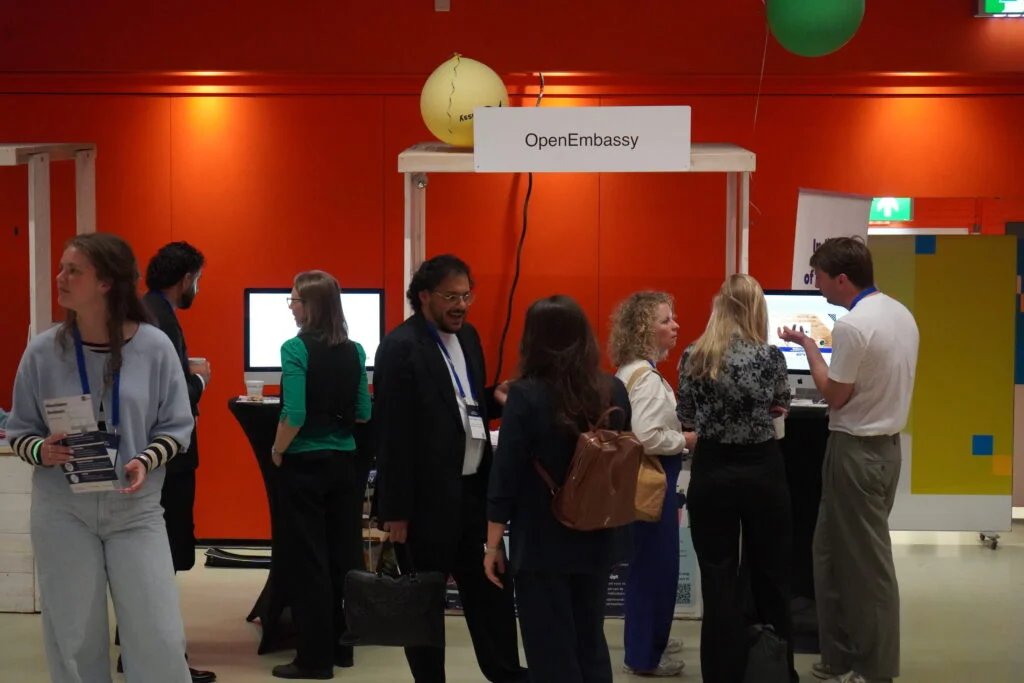
On April 29, 2021, we organized a wonderful, inspiring, and intensive webinar through the Newcomers & Work Platform: A Focus on Skills. Engaged participants, all the wonderful speakers, and the participating initiatives showed us what a focus on skills rather than (only) CVs and diplomas can achieve, and what the important points of attention are. Below, we formulate ten key insights from the webinar on how a focus on the skills of newcomers yields more than just a focus on CVs and diplomas.
1. The international trend of shifting focus from CVs and diplomas to skills is a necessary shift.
Labor market shortages and increasing (forced) migration make it necessary to look at labor potential in a different way. Developments such as the ever-faster pace of change in professions and changing professions during one's career also mean that education alone is no longer capable of delivering the right profile to the labor market.
2. The monopoly on recognition for learning currently lies with education in the form of certificates and diplomas.
But that overlooks a large part of what someone can do and knows.
You learn everywhere, throughout your entire life. By focusing on skills, the abilities you have acquired in all kinds of places (education, work, home, on the road) are also made explicit. This recognition is essential, especially for newcomers. Their transition and the journey they have made could in itself be seen as an achievement. It also provides an opportunity to appreciate the care they provide for their families (as a mother, father, or caregiver).
3. The shift from a focus on diplomas and CVs to a focus on skills is equivalent to a shift from a focus on shortcomings to a focus on opportunities.
Whereas the current labor market focuses primarily on what someone lacks (compared to people born in the Netherlands), a focus on skills offers the opportunity to look at what someone can do. Instead of shortcomings, the focus here is on opportunities.
4. A focus on skills has the potential to remove obstacles that newcomers face on their path to employment.
Skills provide a common language that transcends cultures, work experience, and education systems. This means that focusing on skills is a way to overcome obstacles that newcomers encounter on their path to employment, such as requirements for work experience and the fact that qualifications obtained abroad are not valued in the same way in the Netherlands.
5. A focus on skills is a way for newcomers to take control of their own talents and development.
Let people indicate their own skills and how they want to develop.
6. Skills tools must be accessible and easy to use.
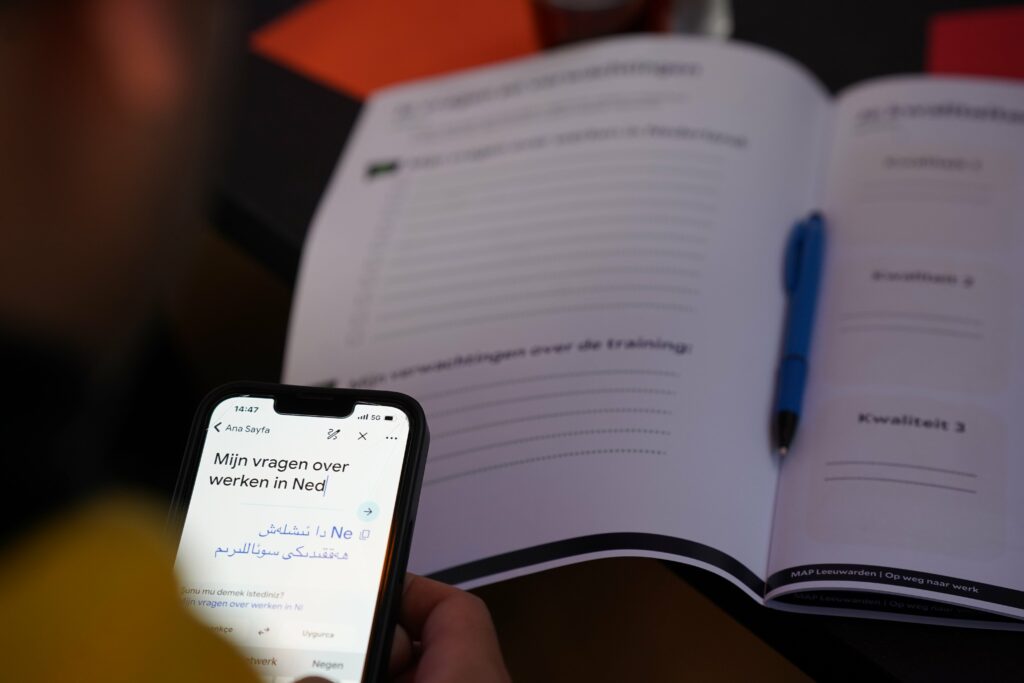
In order to contribute to a more inclusive labor market, it is essential that tools that provide insight into skills are accessible and easy to use. This means that the tool must be usable regardless of educational level, not too language-dependent, culturally specific, or available in multiple languages, and usable online via a phone app.
7. A skills passport must go hand in hand with a skills mindset among employers.
At the moment, there is a lot of talk about skills, but employers are still doing little to put this into practice. Despite their ambition, they often remain stuck in traditional diplomas and job descriptions with strict requirements. So there is still work to be done here, although employers are also expected to increasingly recognize the need to focus on skills, especially in sectors facing labor shortages.
8. In addition to skills, motivation is a very important aspect.
Employers primarily want someone who is motivated and has some basic employee skills; much can be learned on the job. It is important that soft elements, such as motivation, are also included in the skills passport.
9. Skills-based thinking has the potential to make the labor market more inclusive, but that does not necessarily happen.
Existing biases can influence tools that provide insight into skills, so accessibility and user-friendliness of the tools are therefore essential. It is also important to be aware of the fact that people tend to hire people who are similar to them. Awareness of this mechanism is an important first step.
10. Technology alone is not enough; the human touch remains important.
The most intensive variant requires personal guidance and matching, while a lighter variant requires access to other networks to ensure that a newcomer gets through the first door. If you find yourself standing in front of a closed door with your skills passport, you still won't get anywhere.
We wrote this article based on insights from the webinar "A Focus on Skills," which can be viewed online here.
For more information and scientific insights, see the research report on the Skills Passport: "The Skills Passport: An exploration of the opinions of employers and employees" by A.H. Ballakfih, J. Zinsmeister, and N. Bay.
And this brochure from the SER on current developments in the skills-oriented labor market.
Ready to get started?
Check here to see which initiatives were present at the webinar and how you can make use of the tools they offer.
Webinar
Watch the webinar 'A Focus on Skills' here
Research Report
Read the report on the Skills Passport here
Brochure
Brochure from the SER