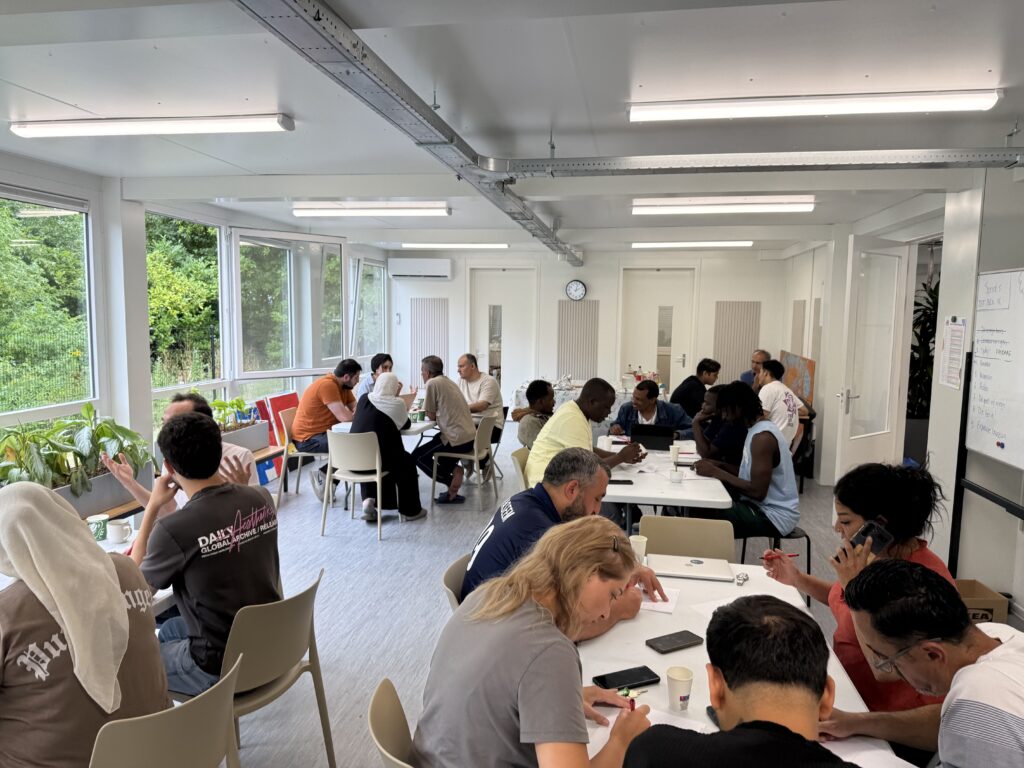
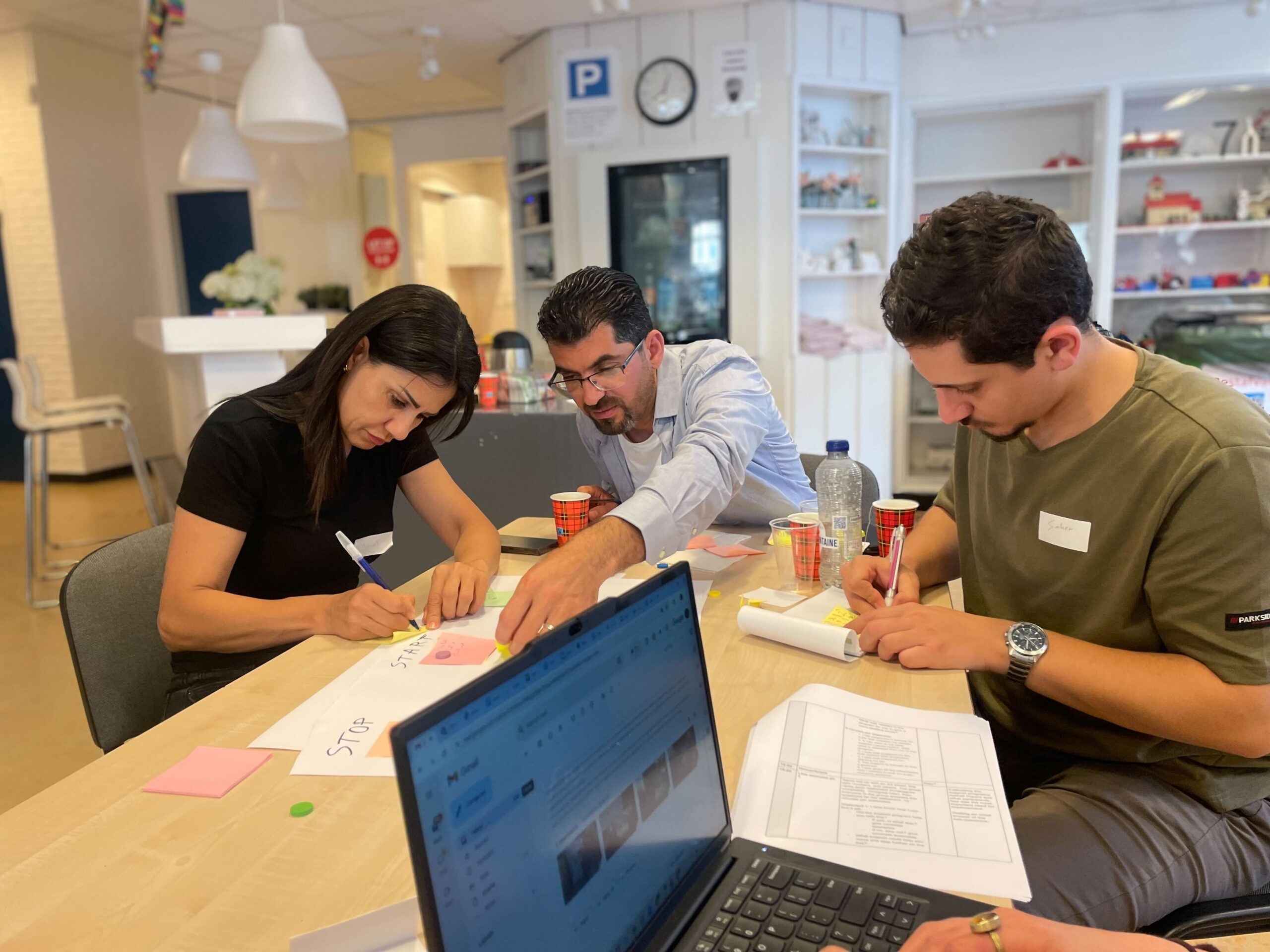
NewBees offers a supplementary program for young people in the Z-route who are integrating into society: the Social Service Program (MDT). The MDT helps young newcomers (aged 17 to 30) with personal development and preparation for the labor market. Participants take part in workshops and networking meetings, and also do volunteer work. This allows participants to develop their talents and contributes to an inclusive society.
Experiences and effective elements from expert pools in Arnhem, Zaandam, and Hoorn
Why MDT is relevant for young people in the Z-route
Many young people who are integrating via the Z-route want to get to grips with their new environment as quickly as possible: learning the language, building contacts, and understanding how education and work function in the Netherlands. In practice, it proves difficult to do this in the formal integration setting alone. That is why a program such as NewBees' Social Service Time (MDT) is an important addition for this group.
In three expert pools in Arnhem, Zaandam, and Hoorn, we asked young people what helps them move forward—and which parts of the MDT contribute to this in concrete terms. Their experiences show that MDT offers opportunities for talent development, social participation, and future orientation. At the same time, young people indicate where reinforcement is needed to make better use of these opportunities, especially for those following the Z-route.
Language, practice, and encounter in context
Participants particularly appreciate the fact that language and practice go hand in hand at MDT. Many young people mention that using language in a real-life context (at the local supermarket, the library, during volunteer work) allows you to learn much faster and more naturally than in regular classrooms. This is closely aligned with the core of the Z-route: learning by doing.
In addition, MDT helps young people gain insight into Dutch society. Excursions, language cafés, and opportunities to interact with local residents not only provide language stimulation, but also encourage social interaction and build trust. One participant summed it up aptly:

"Yes, they help me with everything... I can develop myself, with culture and language... I keep learning new things. Today is always better than yesterday: I'm making progress." - Participant
For young people in the Z-route — who often arrive with diverse ambitions but still need to find their way — these kinds of positive experiences are crucial for motivation, self-confidence, and future prospects.
Opportunities for improvement: customization and future orientation
At the same time, some of the young people indicate that their guidance is sometimes too general. Young people in the Z-route have different goals and pace. They ask for personal guidance and clear steps towards education or work. One participant said, for example:
"I want to become a beautician. I would like NewBees to explain this profession to me, how I can apply for training, and guide me step by step through this process." - Participant
Young people also mention that group compositions do not always match their learning needs. When language levels and learning speeds vary greatly, some students get stuck while others become bored. A more differentiated and dynamic approach—a success factor in the Z-route—can increase effectiveness.
These signals point to clear potential: MDT can help young people even more effectively on their path to independence if the guidance is tailored more closely to individual routes and ambitions.
MDT and the Z-route: reinforcing what works
The experiences from the expert pools show that MDT contains precisely those elements that make a difference for young people in the Z-route: practice-oriented learning, social safety, realistic language development, and experience-oriented introduction to Dutch society. With a few targeted adjustments, MDT can make an even more powerful contribution to their integration and future prospects.
Based on the insights from the expert pools, we make four recommendations that can be implemented immediately:
- Differentiate groups based on learning pace and language level. This speeds up learning and increases ownership.
- Strengthen guidance toward education and employment. Young people need concrete information and step-by-step support.
- Make co-creation standard practice. Provide regular opportunities for feedback, allowing young people to indicate what they need.
- Pay attention to mental well-being. Young people in the Z-route often carry stress or responsibilities; a safe learning environment helps them persevere.
MDT program: get involved in integration
NewBees' MDT offers young people in the Z-route important opportunities: language in context, new encounters, insight into society, and room for personal growth. Through more customized and future-oriented guidance, this program can become an even stronger link in their integration process. The experiences of the young people themselves show that what works, works because it is close to their own lives and because it actually helps them move forward.