
Under the heading 'ACCESS', we share experiences from our daily practice. Only with access to livelihood security can people who are new to the Netherlands have prospects for the future.
Your son needs to attend special education.
Your son has a low IQ. That's why he needs to attend special education.
The mother—originally a teacher in Syria—is shocked. She doesn't understand, because in his country of origin, the boy was a student who did well in school. Moreover, she observes his eagerness to learn and his development, and she is hopeful. Even though the language is still difficult to learn. The father looks despairing; special education sounds good, but a low IQ does not.
Poor contact with school and teacher
It took a long time for them to understand what was going on, because they don't have very good contact with the school and the teacher. That's partly due to the language barrier, but the mother also feels that there's just no connection. They don't take her expertise seriously. It's all very difficult.
Tests in Dutch
When we speak to the teacher, she tells us that the school has administered various tests, which show that the son has a low IQ. The boy has now been in the Netherlands for three years. When we ask whether the test also included his native language, she responds with surprise: "Of course not, this is a Dutch school."
Perhaps the test is right. Perhaps not. But either way, the focus on this child is dominated by what he cannot do or does not know. He senses this. His talents, desires, or ambitions are never really discussed. The tests mainly make him feel how badly he still fits into the system in the Netherlands.
Under-advising, underestimation
Almost every week, we encounter children who are treated this way. And we often conclude that they are being under-advised, underestimated, and not seen for what they are capable of. Sometimes special education is a good place for a child, but often enough it is not. Mainly because moving on from special education to, for example, regular education and HAVO or VWO seems impossible. Their self-image takes a big hit at an early age.
Action Research
On paper, children in the Netherlands have access to education that suits them. In practice, we see a systematic tendency to belittle children from families who have had to flee their homes.
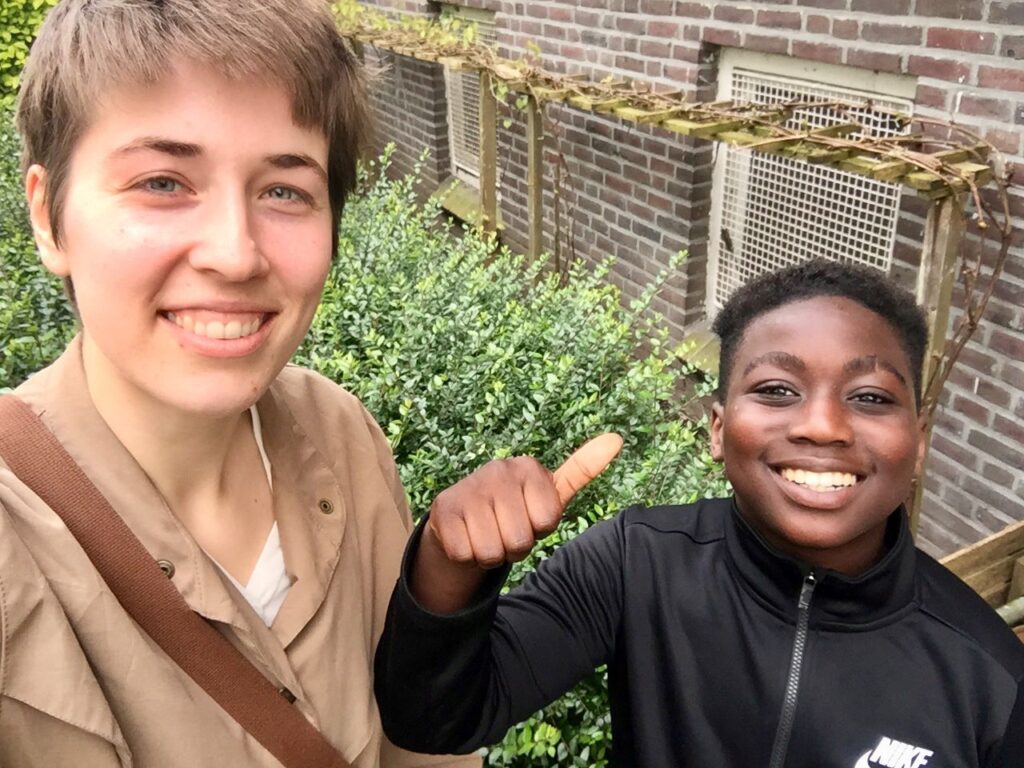
In our action research on the children we pair with TOMaatjes, we learn a lot every day about how education for these children can be improved. Want to know more? Emailopenembassy